
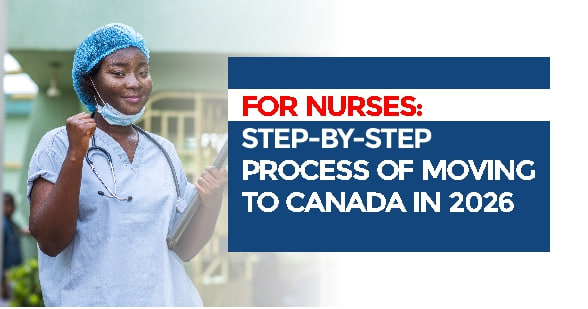
If you’re thinking about moving to Canada as a nurse in 2026, you’re not alone.
Every year, thousands of healthcare professionals from Nigeria, Ghana, Kenya, India, the Philippines, and many other countries begin the step-by-step process of moving to Canada as a nurse in 2026 in search of better career opportunities, higher salaries, and a brighter future.
Canada continues to welcome qualified nurses because the country needs more healthcare professionals to meet growing demand. Whether your goal is permanent residence or simply to build a successful nursing career in Canada, understanding the right process from the beginning can save you time, money, and unnecessary stress.
If you’re still exploring your options for relocating, you may also find our guide on 4 Ways Nigerians Move to Canada in 2026 helpful because it explains some of the most common immigration pathways available today.
If you’re wondering how to move to Canada as a nurse, this guide will explain everything in simple language.
Why Canada Needs More Nurses
One question we hear often is:
“Is Canada still hiring nurses?”
The answer is yes.
Canada has an ageing population, many experienced nurses are retiring, and healthcare facilities continue to expand across the country.
As a result, there are many nursing jobs in Canada available for qualified professionals who meet the immigration and licensing requirements.
This demand is one of the reasons Canada immigration for nurses continues to attract applicants from around the world. If you’re wondering which occupations are currently in demand, you can also read our article on What Jobs Are Easy to Get in Canada – A Guide for Foreign Workers Planning to Move to Canada in 2026.
Step 1: Know Your Nursing Category
Before you begin the step-by-step process of moving to Canada as a nurse in 2026, you need to understand your nursing category.
Canada recognises different nursing professions, including:
- Registered Nurse (RN)
- Licensed Practical Nurse (LPN)
- Registered Practical Nurse (Ontario)
- Registered Psychiatric Nurse (selected provinces)
Knowing your category helps you understand the requirements for obtaining your Canadian nursing licence.
Step 2: Get Your Nursing Qualifications Assessed
One of the biggest mistakes applicants make is assuming their nursing qualification automatically qualifies them to practise in Canada.
It doesn’t.
Before you can obtain a Canadian nursing licence, your education and professional experience must be assessed to determine whether they meet Canadian standards.
Most internationally educated nurses in Canada begin this process by submitting documents such as:
- Nursing degree or diploma
- Academic transcripts
- Professional licence
- Employment history
- Identity documents
Starting this process early can save months later in your immigration journey.
Step 3: Meet the Language Requirements
Strong communication is an important part of working as a nurse.
Whether you’re speaking with patients, doctors, or other healthcare professionals, language proficiency matters.
Most applicants pursuing Canada immigration for nurses will need approved English or French language test results.
Good language scores don’t only support your licensing application—they can also improve your immigration profile.
Step 4: Apply for Your Canadian Nursing Licence
Many people think immigration and licensing are the same thing.
They’re not.
Your immigration application allows you to live in Canada.
Your Canadian nursing licence allows you to work as a nurse.
Each Canadian province has its own nursing regulator.
Depending on your assessment, you may be asked to complete:
- Additional education
- Competency assessments
- Licensing examinations
- Supervised practice
These requirements help ensure internationally educated nurses meet Canadian healthcare standards.
Step 5: Choose the Right Immigration Pathway
Now comes the immigration part.
There are several pathways available for nurse immigration to Canada in 2026, and the best option depends on your personal profile.
Express Entry for Nurses
One of the most popular options is Express Entry for nurses.
If you meet the eligibility requirements and have a competitive profile, you may receive an invitation to apply for permanent residence.
Your age, education, language scores, and work experience all influence your chances. Understanding the type of work experience that counts can make a big difference, so you may also want to read What Type of Work Experience Is Required for Canada PR?
Provincial Nominee Program for Nurses
Another excellent option is the Provincial Nominee Program for nurses.
Many provinces actively recruit healthcare workers because of ongoing labour shortages.
Receiving a provincial nomination can significantly improve your chances of obtaining Canada PR for nurses. You can also learn more about the general eligibility requirements in our article 5 Requirements for Canadian Permanent Residency in 2026.
Employer-Supported Immigration
Some Canadian healthcare employers recruit qualified nurses directly from overseas.
Depending on your situation, an employer-supported pathway may also be available.
Choosing the right pathway is one of the most important decisions you’ll make during your journey to move to Canada as a nurse.
Not sure which immigration pathway is best for you?
We’ll assess your qualifications and recommend the immigration pathway that best suits your goals.
Step 6: Prepare Your Documents
Once you’ve identified the right immigration pathway, it’s time to gather your documents.
These typically include:
- Passport
- Educational certificates
- Credential assessment reports
- Language test results
- Employment reference letters
- Police clearance certificates
- Medical examination
- Proof of funds (where applicable)
One of the best ways to avoid delays is to prepare properly before you submit your application. Our guide on What Is the Best Way to Prepare for a Canada Visa Application shares practical tips that can help you get your documents in order.
Preparing your documents properly helps avoid delays during your Canada immigration for nurses application.
Step 7: Submit Your Application
After completing your preparations, you can submit your immigration application.
Take your time.
Simple mistakes, missing documents, or inaccurate information can delay your application.
Many successful applicants choose to work with licensed immigration consultants to ensure everything is completed correctly.
This is also why it’s important to avoid relying on immigration myths or incomplete advice. Before applying, we recommend reading 3 Things Most Consultants Don’t Tell You About Canada Visa to better understand some of the realities of the immigration process.
Step 8: Prepare for Life in Canada
Receiving your approval is exciting—but planning doesn’t stop there.
Before travelling, think about:
- Housing
- Banking
- Transportation
- Weather
- Cost of living
- Schooling (if applicable)
- Continuing licensing requirements
Beyond immigration, settling successfully also requires developing the right skills. Our article 4 Essential Skills You Need Before Moving to Canada explains how you can prepare yourself for life and work in Canada.
Preparing ahead makes it much easier to begin your new nursing career in Canada.
Step 9: Begin Your Nursing Career in Canada
After completing both your immigration and licensing requirements, you can finally begin your new life.
Many internationally educated nurses choose Canada because of opportunities such as:
- Competitive salaries
- Career progression
- Stable employment
- Professional development
- Better work-life balance
Whether your goal is working in hospitals, long-term care facilities, or community healthcare, there are many nursing jobs in Canada waiting for qualified professionals.
Common Mistakes to Avoid
If you want your journey to move to Canada as a nurse to go smoothly, avoid these common mistakes.
Waiting Too Long
Credential assessments and licensing take time.
Start early.
Choosing the Wrong Immigration Program
Not every pathway is suitable for every applicant.
The right strategy depends on your qualifications and goals.
Ignoring Licensing Requirements
Remember, obtaining Canada PR for nurses does not automatically give you permission to practise nursing.
You must still complete the requirements for your Canadian nursing licence.
Submitting Incomplete Documents
Always review your application carefully before submission.
Small mistakes can lead to significant delays.
If you’re planning to move to Canada as a nurse, don’t wait until the last minute to begin preparing.
Understanding the step-by-step process of moving to Canada as a nurse in 2026 will help you avoid costly mistakes and improve your chances of success.
Every applicant’s situation is unique, which is why choosing the right immigration pathway is so important.
If you’re ready to explore your options, Book an Evaluation Call with Loft Immigration Services Inc.
As a licensed Canadian immigration consulting firm based in Toronto, we’ll assess your profile, explain your options clearly, and guide you through every stage of your Canada immigration for nurses journey.
Frequently Asked Questions (FAQs)
1. Can Nigerian nurses move to Canada in 2026?
Yes. Qualified Nigerian nurses can move to Canada in 2026 through different immigration pathways, such as Express Entry and Provincial Nominee Programs, provided they meet the eligibility, licensing, and immigration requirements.
2. Do I need a job offer to move to Canada as a nurse?
Not always. Some immigration pathways allow you to apply without a job offer. However, having a valid job offer may improve your chances under certain immigration programs.
3. Do I need a Canadian nursing licence before I can work?
Yes. Before you can practise as a nurse in Canada, you must meet the licensing requirements of the nursing regulatory body in the province where you intend to work. Immigration approval alone does not allow you to work as a nurse.
4. What is the best immigration pathway for nurses in Canada?
The best pathway depends on your age, education, work experience, language proficiency, and overall profile. Many nurses qualify through Express Entry or a Provincial Nominee Program (PNP), but the right option varies from person to person.
5. How long does the process of moving to Canada as a nurse take?
The timeline varies depending on factors such as credential assessment, licensing requirements, immigration program, and application processing times. Starting your preparation early can help reduce delays.
6. Can Loft Immigration help me move to Canada as a nurse?
Yes. Loft Immigration Services Inc. is a licensed Canadian immigration consulting firm that can assess your profile, explain your immigration options, and guide you through the process of moving to Canada as a nurse. If you’re unsure where to begin, you can Book an Evaluation Call to receive personalized advice from our licensed immigration consultants.